



If you’ve ever watched a competitive swim meet, you already know freestyle dominates. It’s the fastest, the most-watched, the one that fills highlight reels. But the stroke we take for granted today — arms windmilling overhead, feet kicking in a tight rhythm — took over a century of trial, error, and a fair bit of cross-cultural borrowing to become what it is.
Here’s how we got here.
It Didn’t Start in a Pool
For most of human history, swimming meant survival, not sport. When competitive swimming did emerge in Europe during the 19th century, the dominant style was the breaststroke — arms pushing forward underwater, a frog-like kick, very genteel, very slow.
In 1844, a group of Native American swimmers visited London and competed against British swimmers. They won easily using an overarm technique that pulled them through the water at speeds that baffled onlookers. The British press found the style “grotesque” and largely dismissed it. A mistake, as it turned out.
The Trudgen Arrives
It took another few decades before the West caught on. In the 1870s, an English swimmer named John Trudgen returned from South America having observed indigenous swimmers using a similar overarm stroke. He adapted it, paired it with a scissor kick, and introduced it to competitive swimming in Britain.
The Trudgen stroke wasn’t quite freestyle as we know it. It was faster than breaststroke, but the scissor kick created drag. Still, it was a turning point — proof that lifting your arms out of the water was the way forward.
Enter the Flutter Kick
The final piece fell into place around the turn of the 20th century. Australian swimmers, Richmond Cavill in particular, influenced by a swimmer he’d observed in the Solomon Islands — developed what became known as the Australian Crawl: the overarm stroke combined with a continuous up-and-down flutter kick.
It was faster than anything seen before. The world noticed.
By the time the early Olympic Games were establishing swimming as a serious competitive sport, the crawl had taken over. Swimmers who used it simply won. Eventually, “freestyle” — meaning competitors could choose any stroke — became synonymous with the crawl, because nobody choosing freely would pick anything else.
The Modern Era
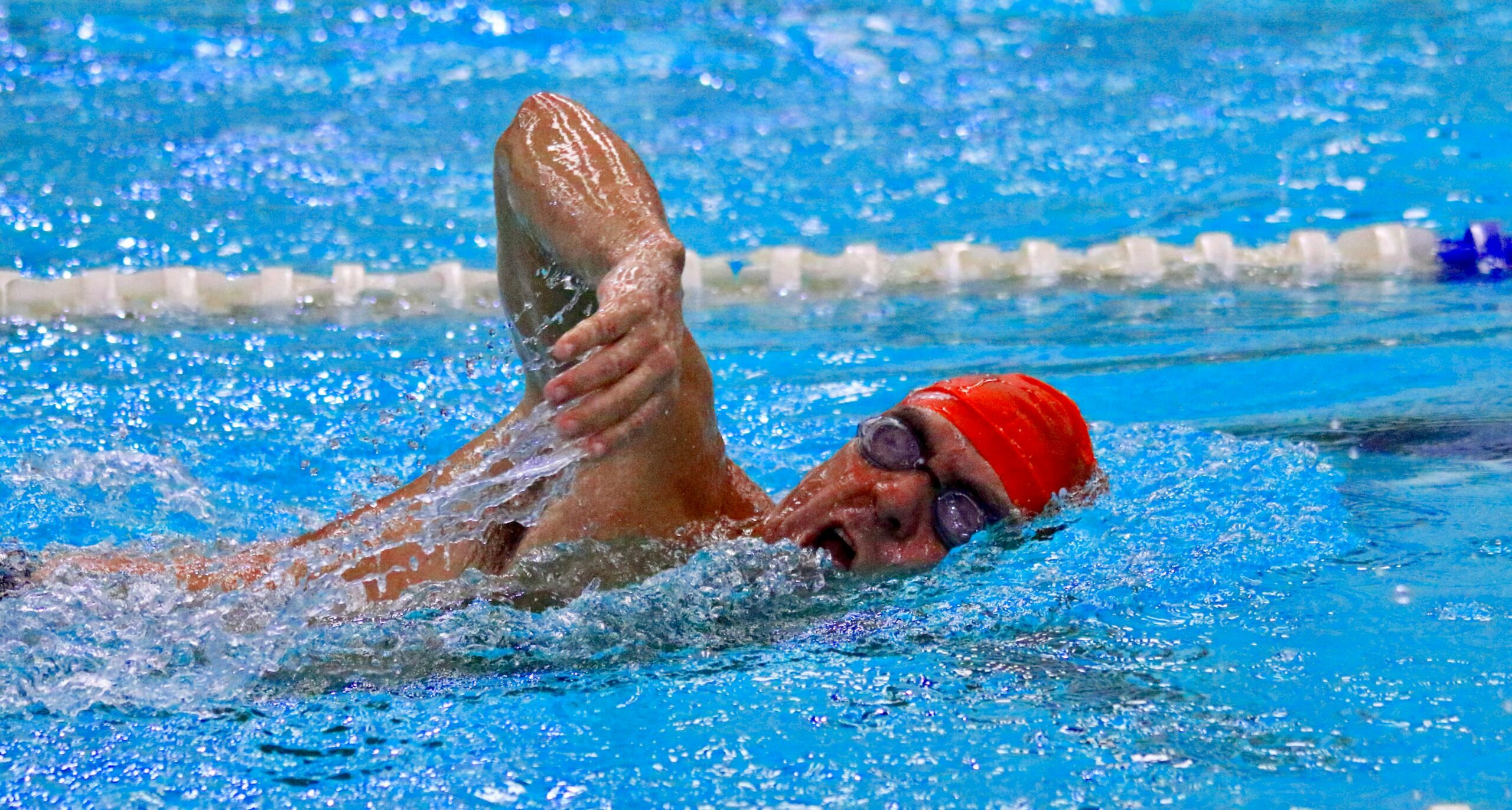
Through the 20th century, the stroke was refined endlessly. Body rotation, breathing technique, the high-elbow catch, flip turns, underwater dolphin kicks off the walls — each generation of coaches and swimmers found new fractions of a second to shave off.
Today, elite freestyle swimmers cover 50 metres in under 21 seconds. The world record has been broken dozens of times in the past century, and it will be broken again.
What started as a technique dismissed by Victorian spectators as unsophisticated is now the gold standard of competitive swimming. Not bad for a stroke the British press once called grotesque.
— Lahore Swimming Club
Leave a Reply